
A Wound…
2024
Anna Tsing's concept of "capitalist ruins" in her book The Mushroom at the End of the World represents a form of dystopia where the destructive effects of capitalism linger even after industries collapse. These ruins are the environmental, social, and economic aftermath left behind by capitalist exploitation—damaged ecosystems, broken communities and bodies, and unstable economies.
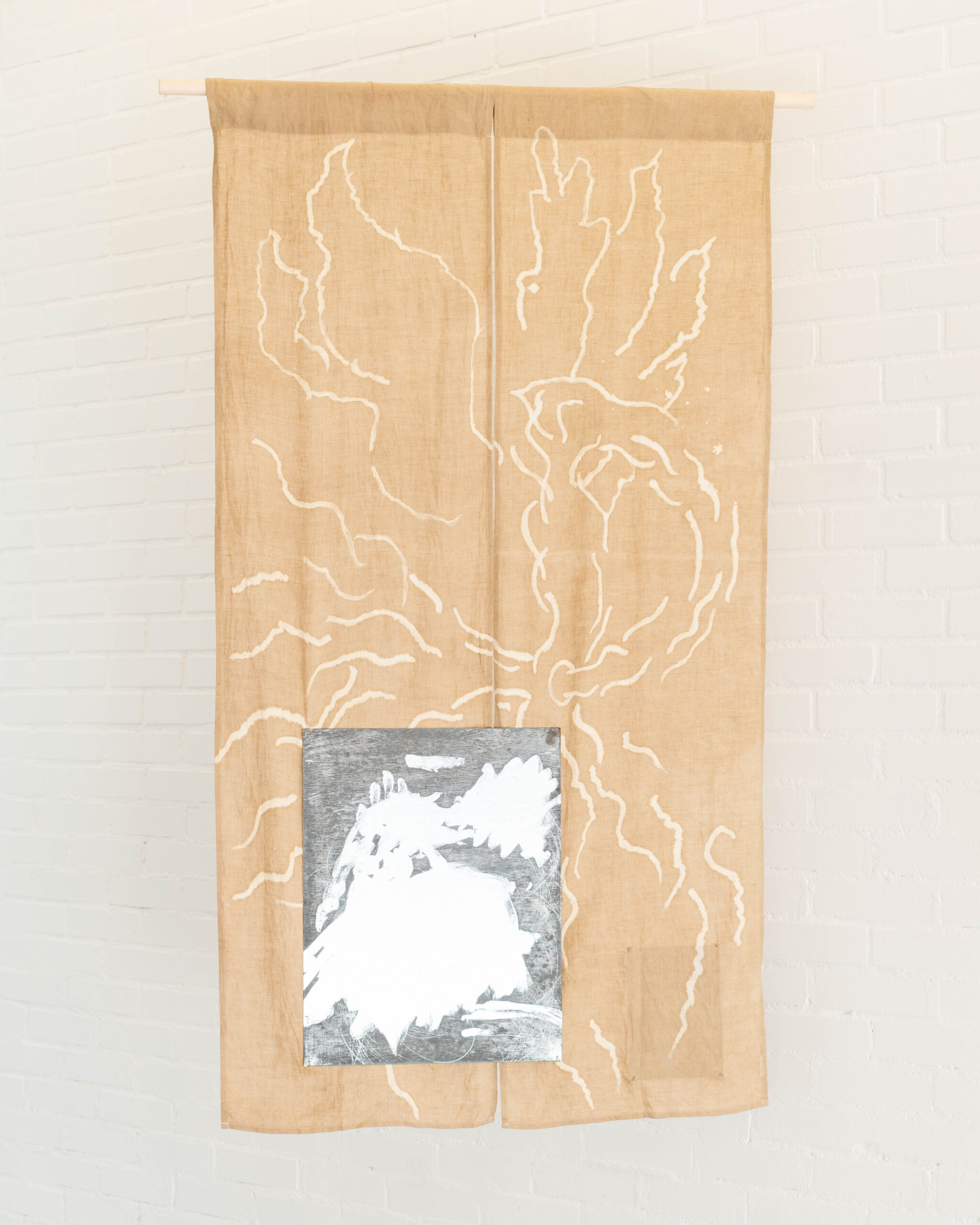
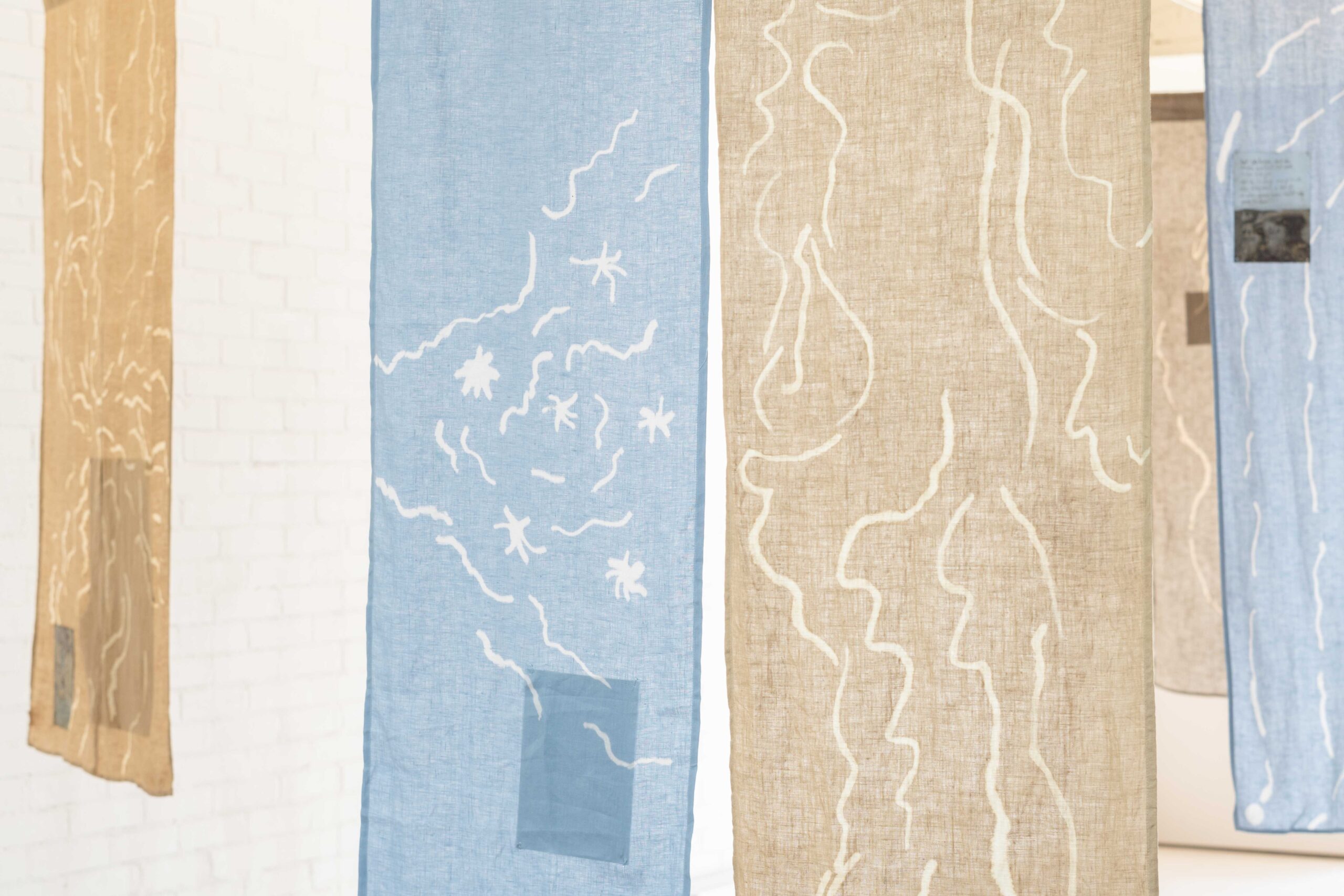
The textile work 'A wound is the ground on which this body rests' is a landscape which exists within such capitalist ruins. Perhaps even more precisely, it could be the ruins of ‘White Supremacist Capitalist [Heteronormative] Patriarchy’, a notion by writer and educator bell hooks that describes a reality of interlocking oppressive structures. Developed during a residency at Plaatsmaken, poet Hannah Chris Lomans and artist Amy Suo Wu began their process by exploring how they could reconnect with their bodies as intentional modes of resisting and surviving the structural and intimate violences and the wounds they leave on the body. Thus they embarked on a journey of moving together through slow practices of walking and breathing as forms and explored how their bodies could be the starting point for a shared intuitive process of thinking and making. This radical surrender to intuitive and embodied working allowed them to discover the artistic abundance that can be found when straying from the capitalist and goal-oriented methods they were used to in their own artistic practices.
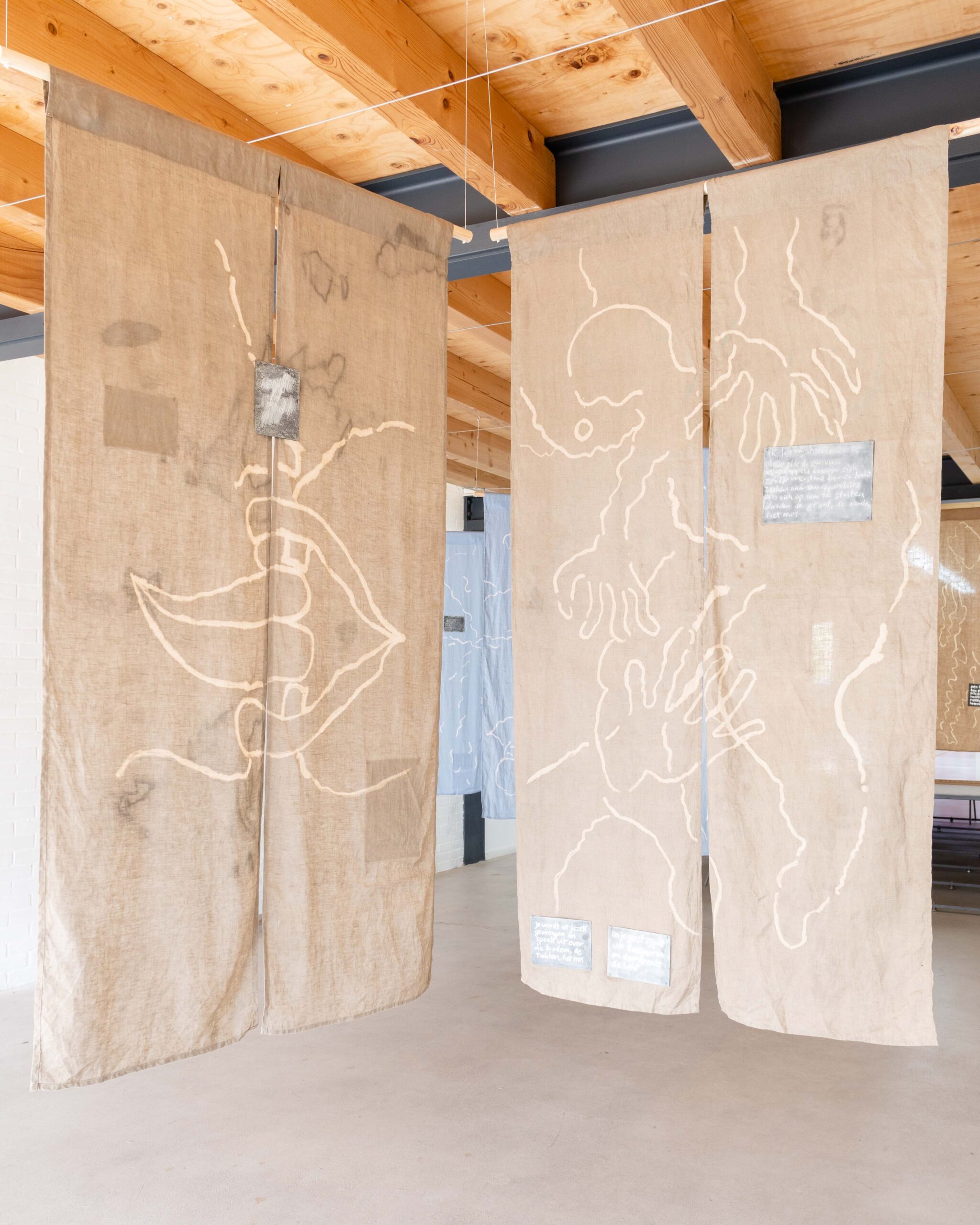
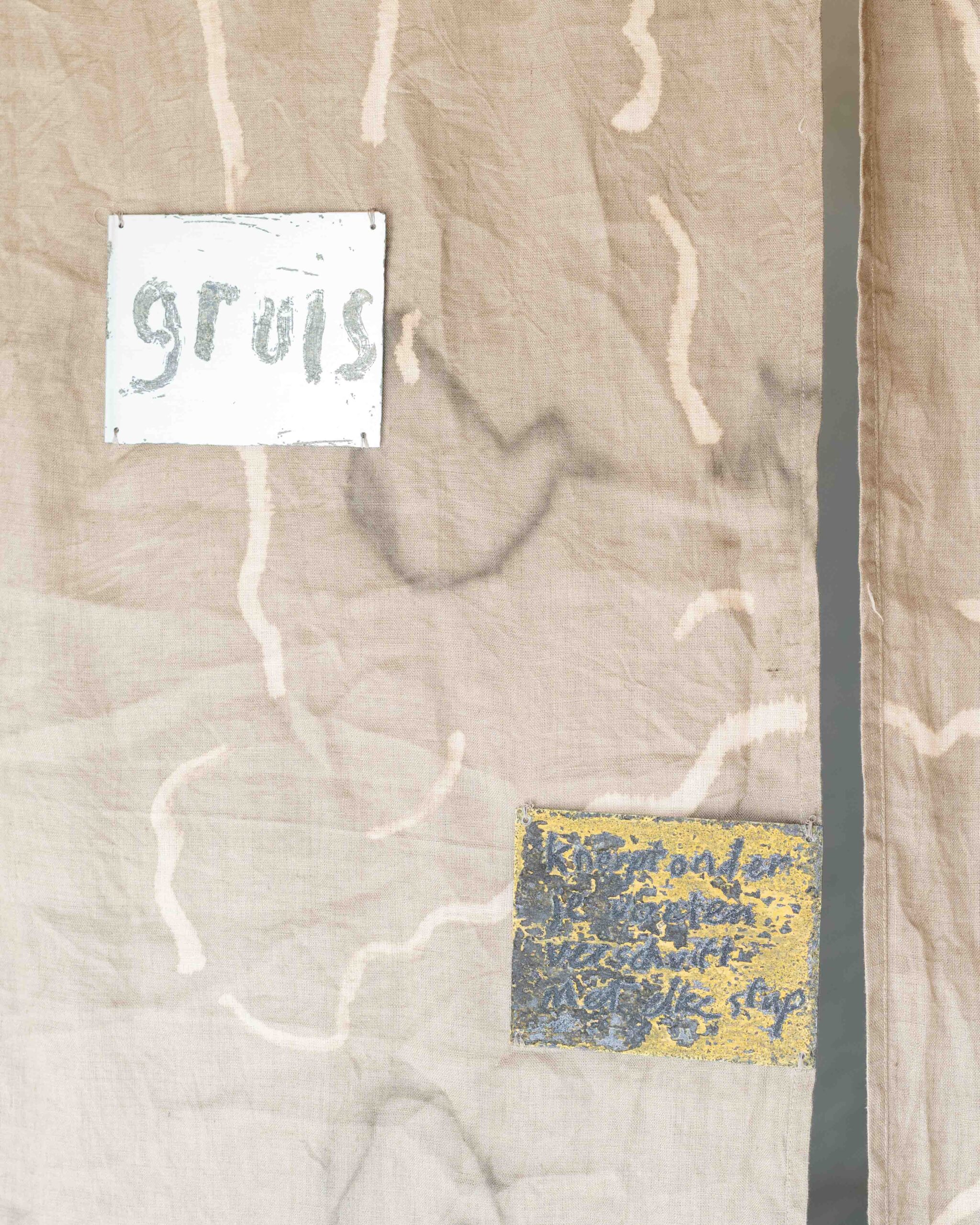
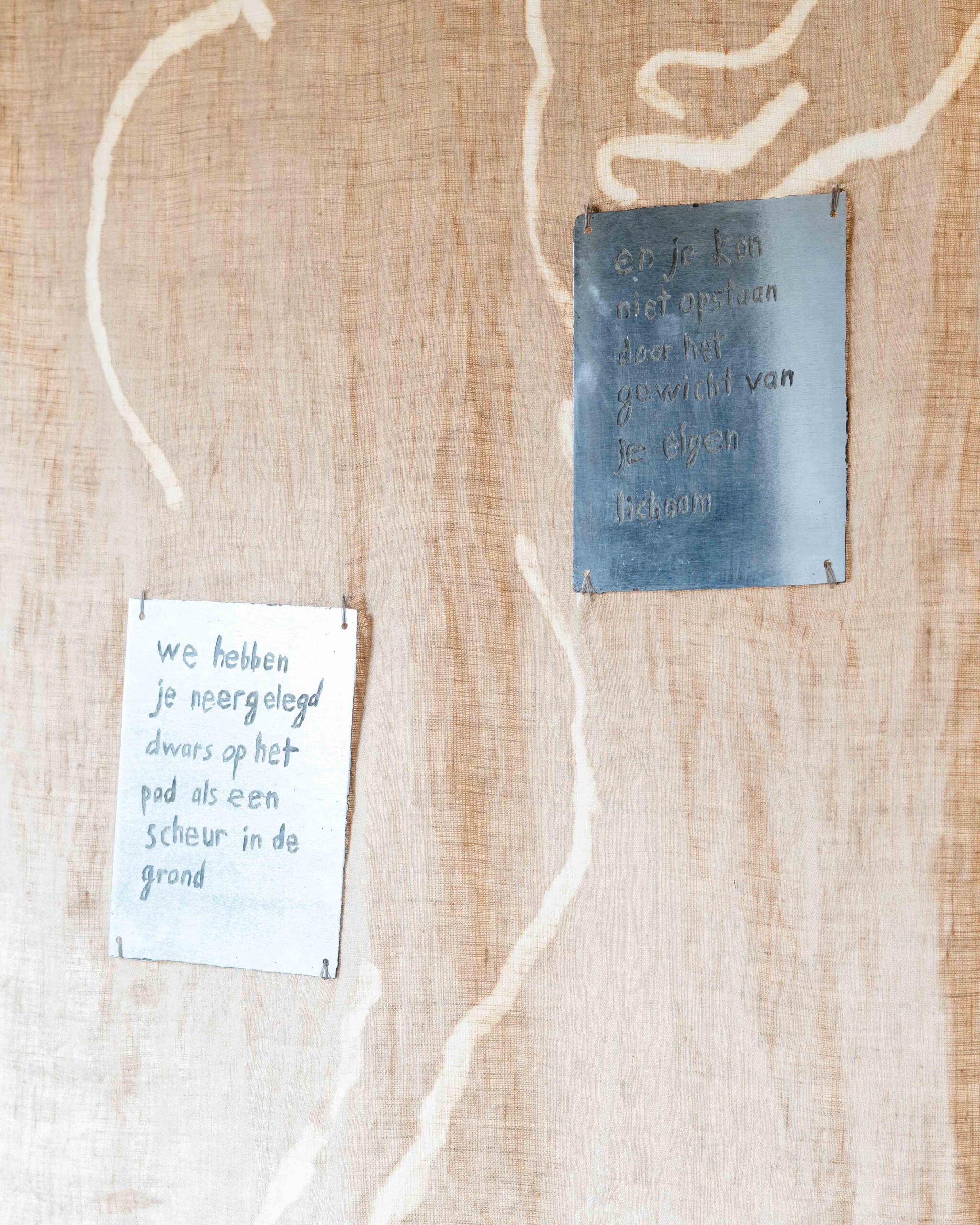
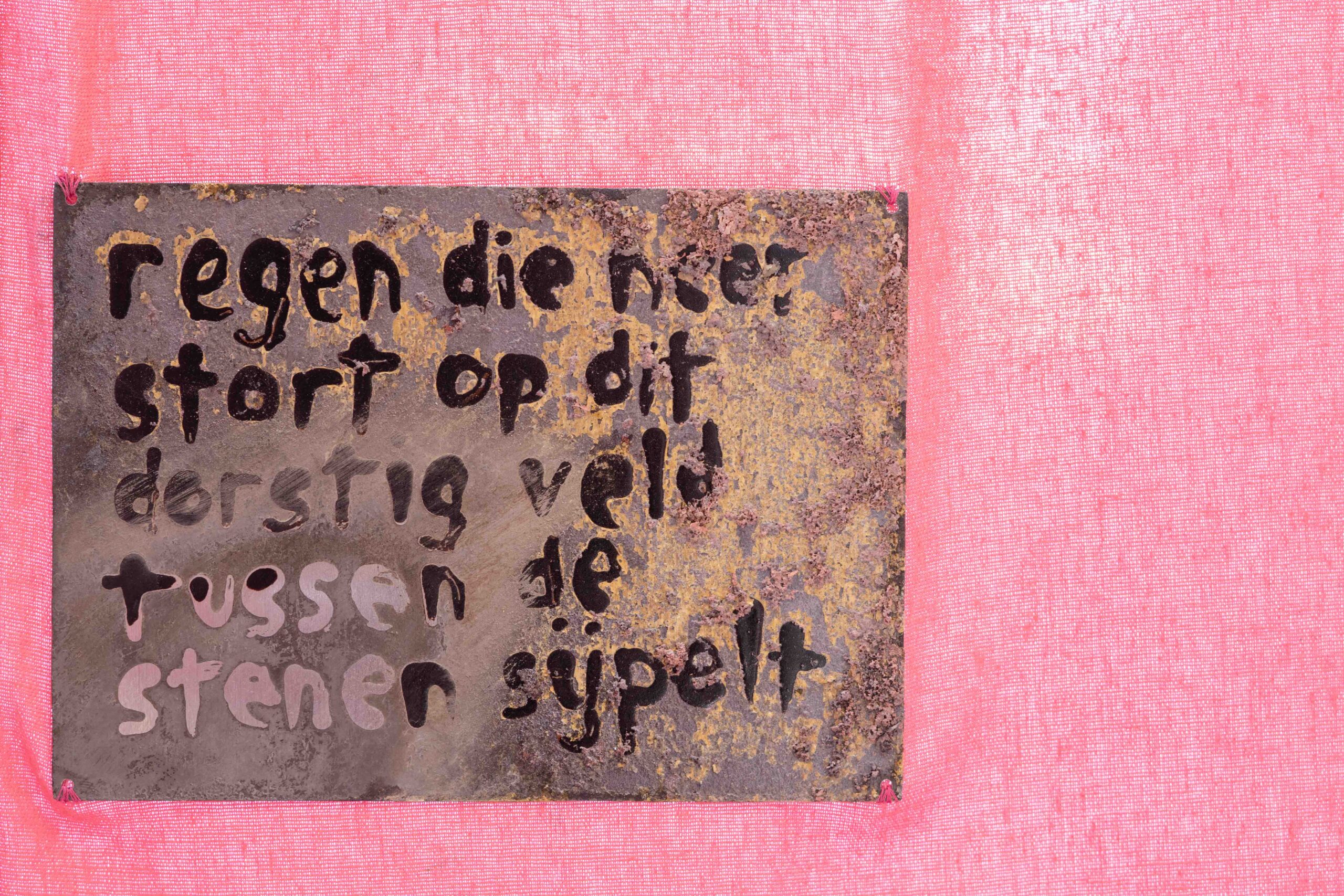
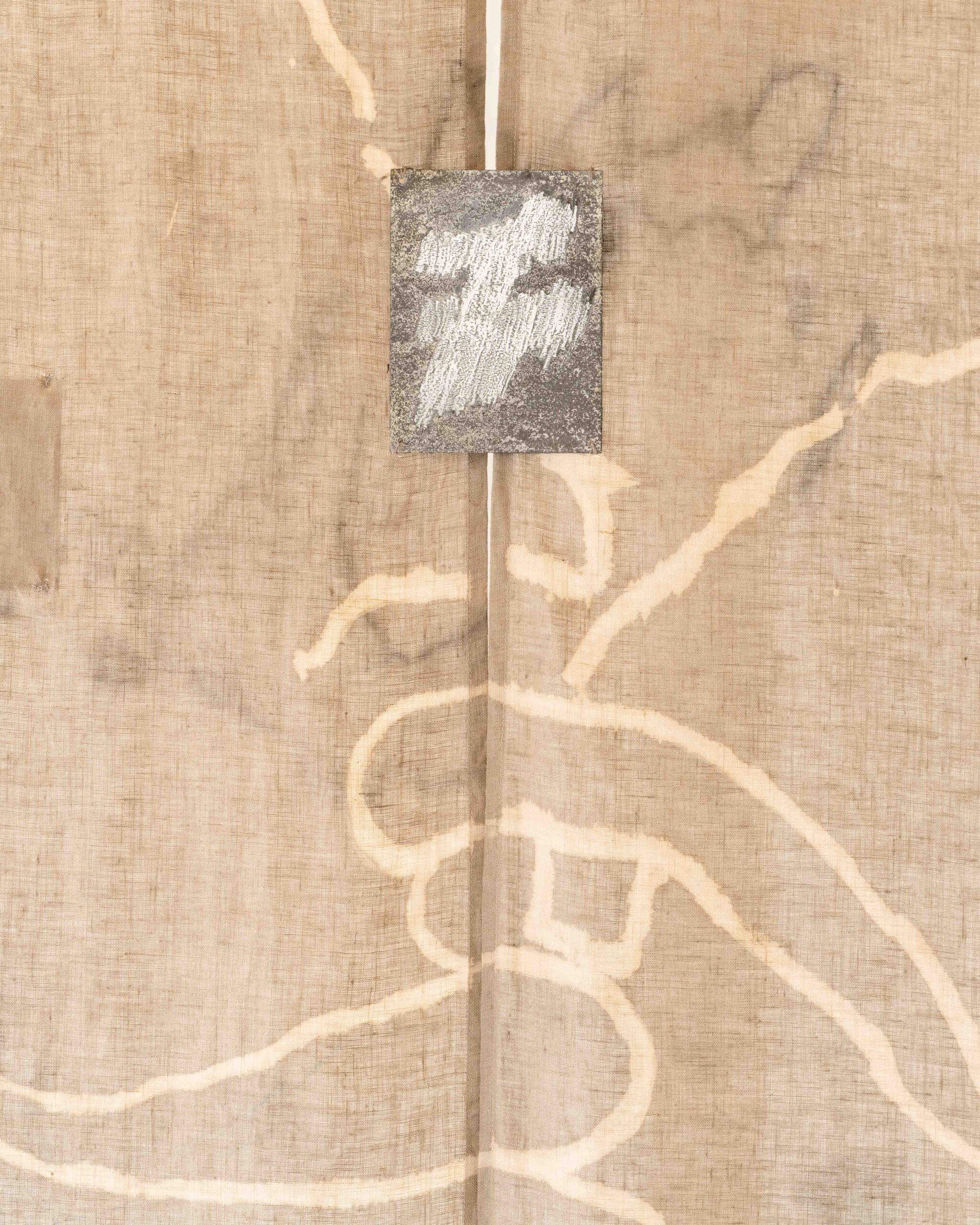
Their collaborative work focuses on the mark as trace, just as a wound forms a memory on the skin. Together they used corrosive processes, methods that eat away, open up, rot, fade or even destroy the surfaces that carry their texts and images. Together again, Hannah's metal pages are sutured to Amy's fabrics with thread, creating an interdependent relationship between the two works.
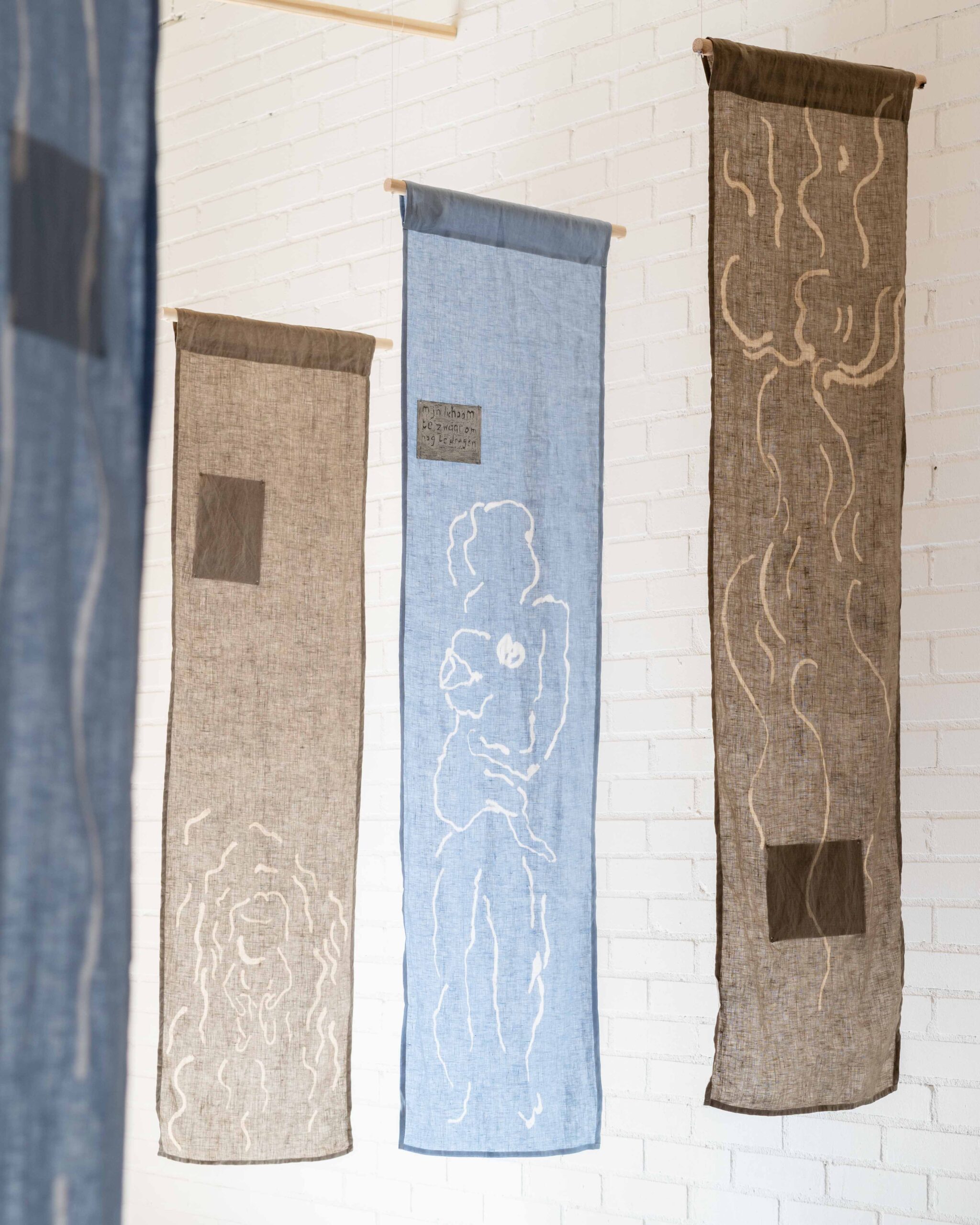
Instead of using paper, Hannah wrote her text on metal. She used materials such as Vaseline to protect the metal plates from the corrosive acid in which they were immersed. The acid ate away at the metal, exposing a different kind of surface, ripping it open and leaving permanent marks. Their text gives us a personal, physical and at times raging language that comes from an awareness of the violent patriarchal ruins around us. A world in which there is still no obvious place for the femme body. The wound caused by this system goes beyond the body. It is a wound in the landscape.
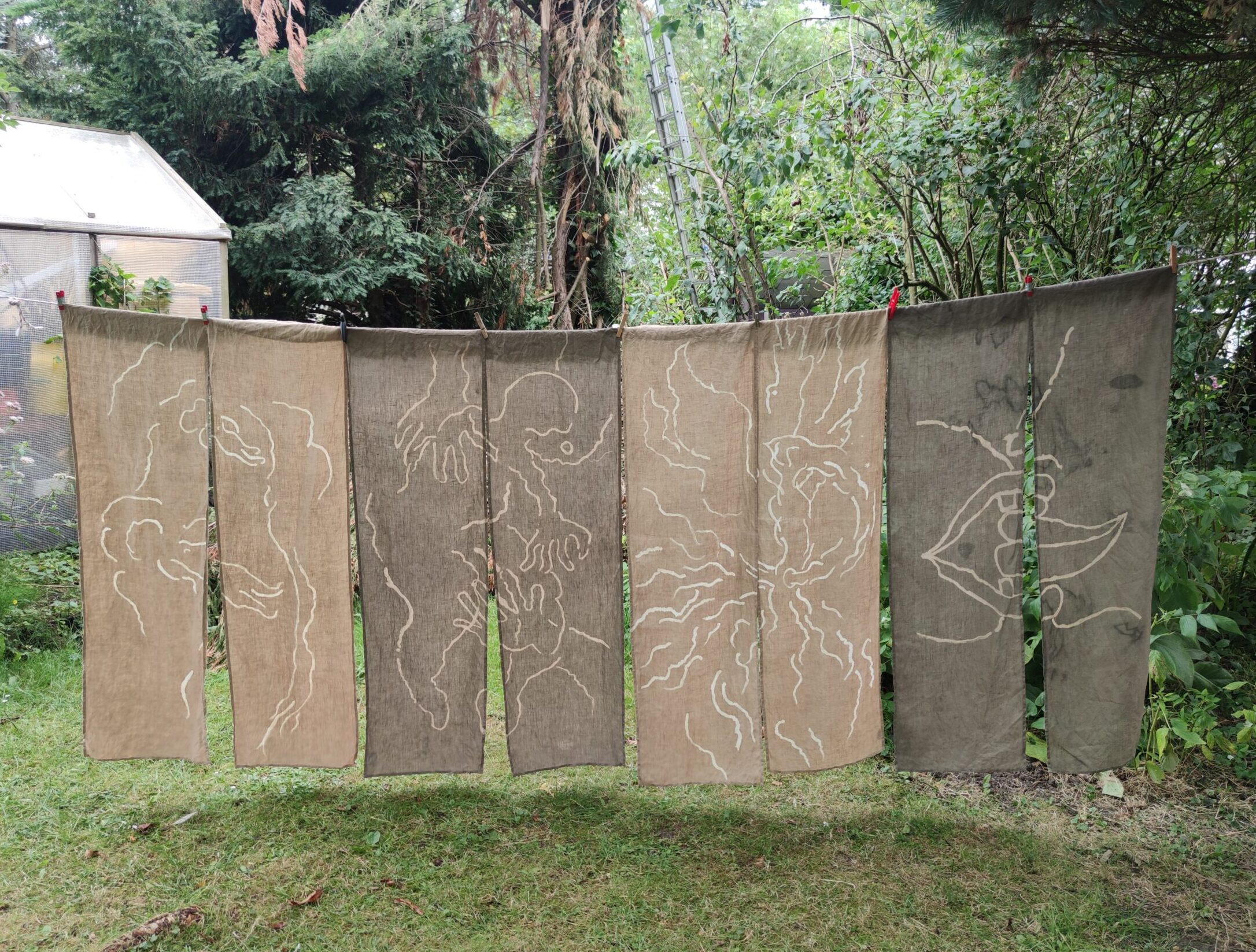
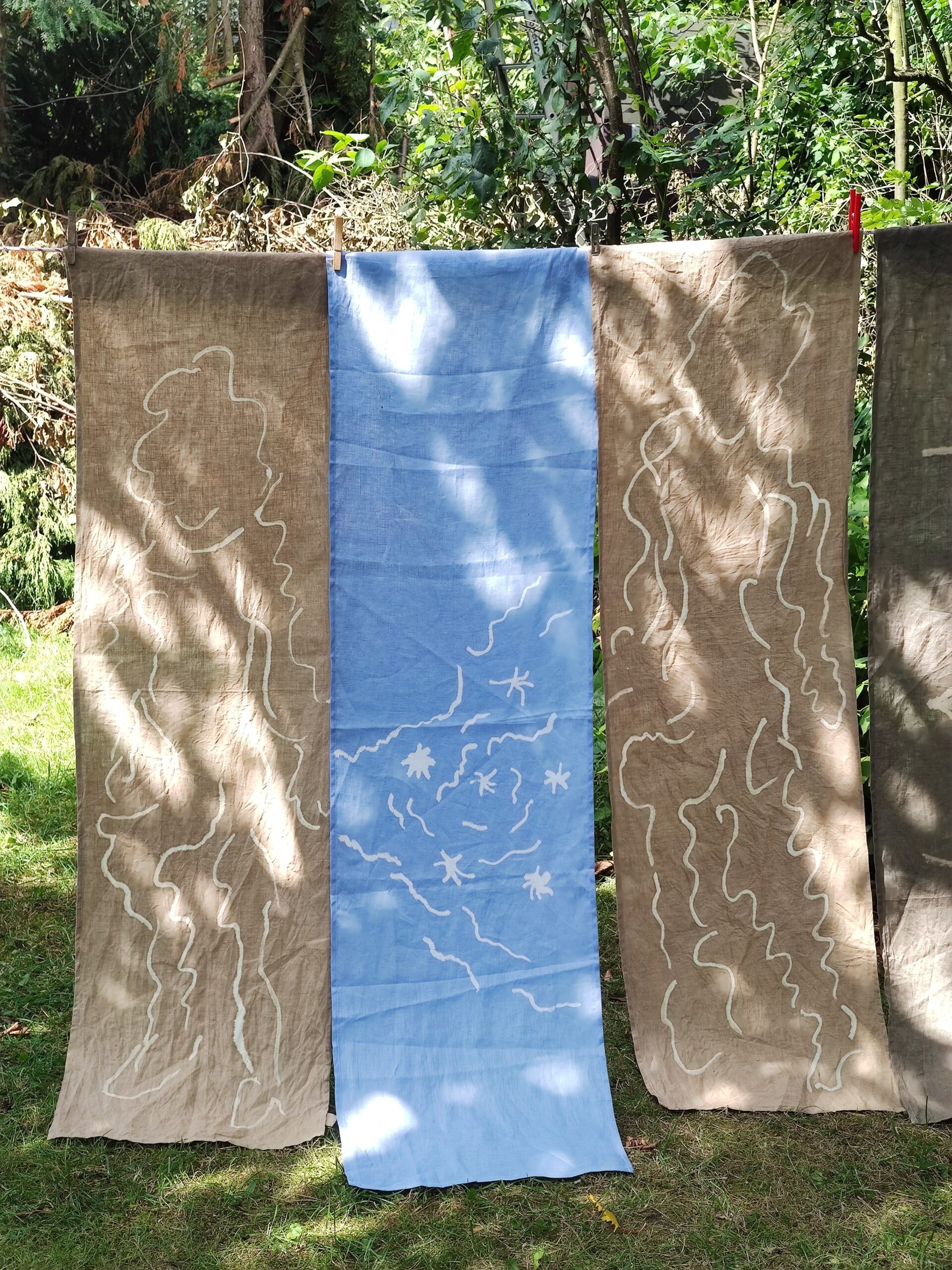
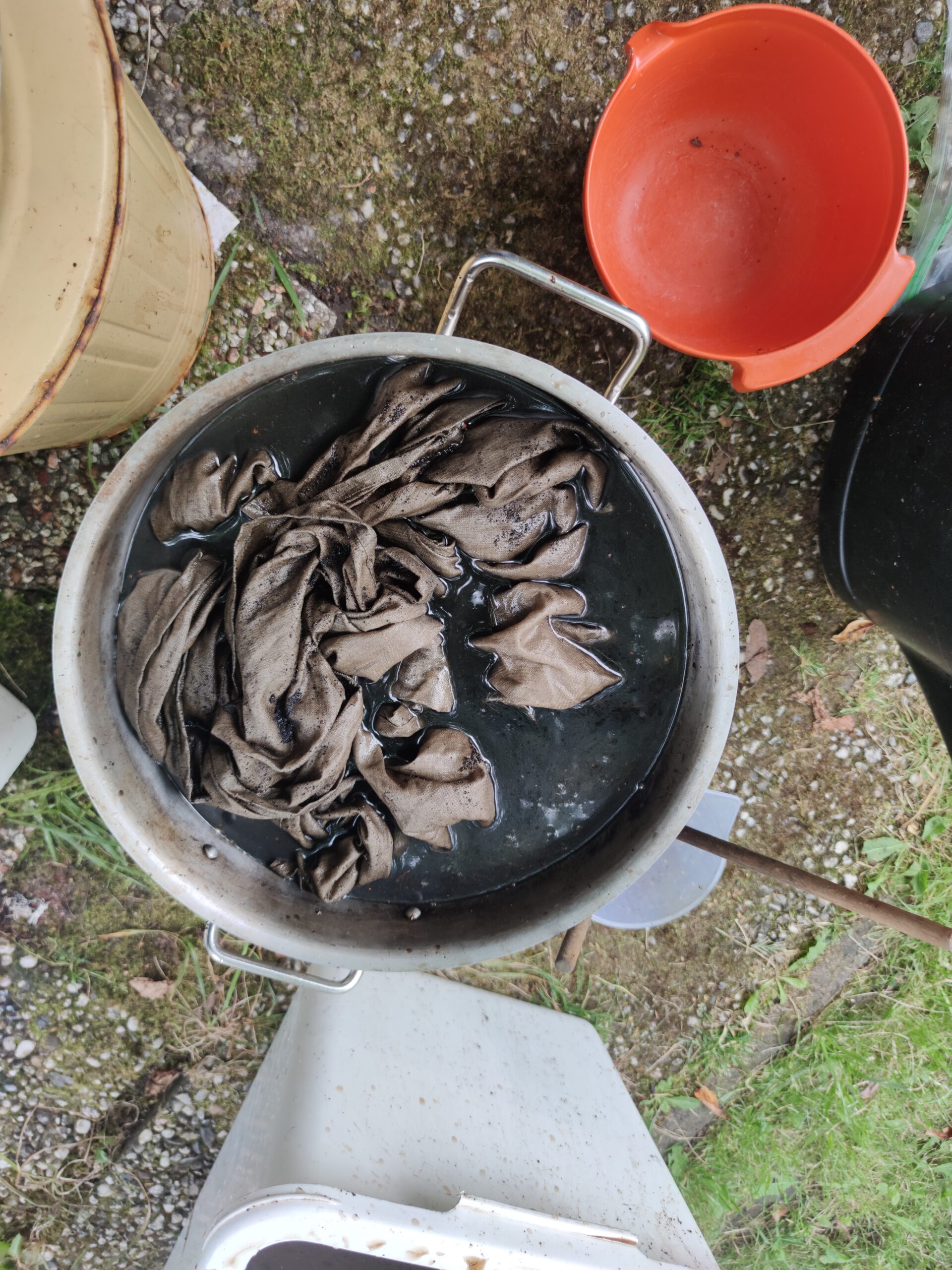
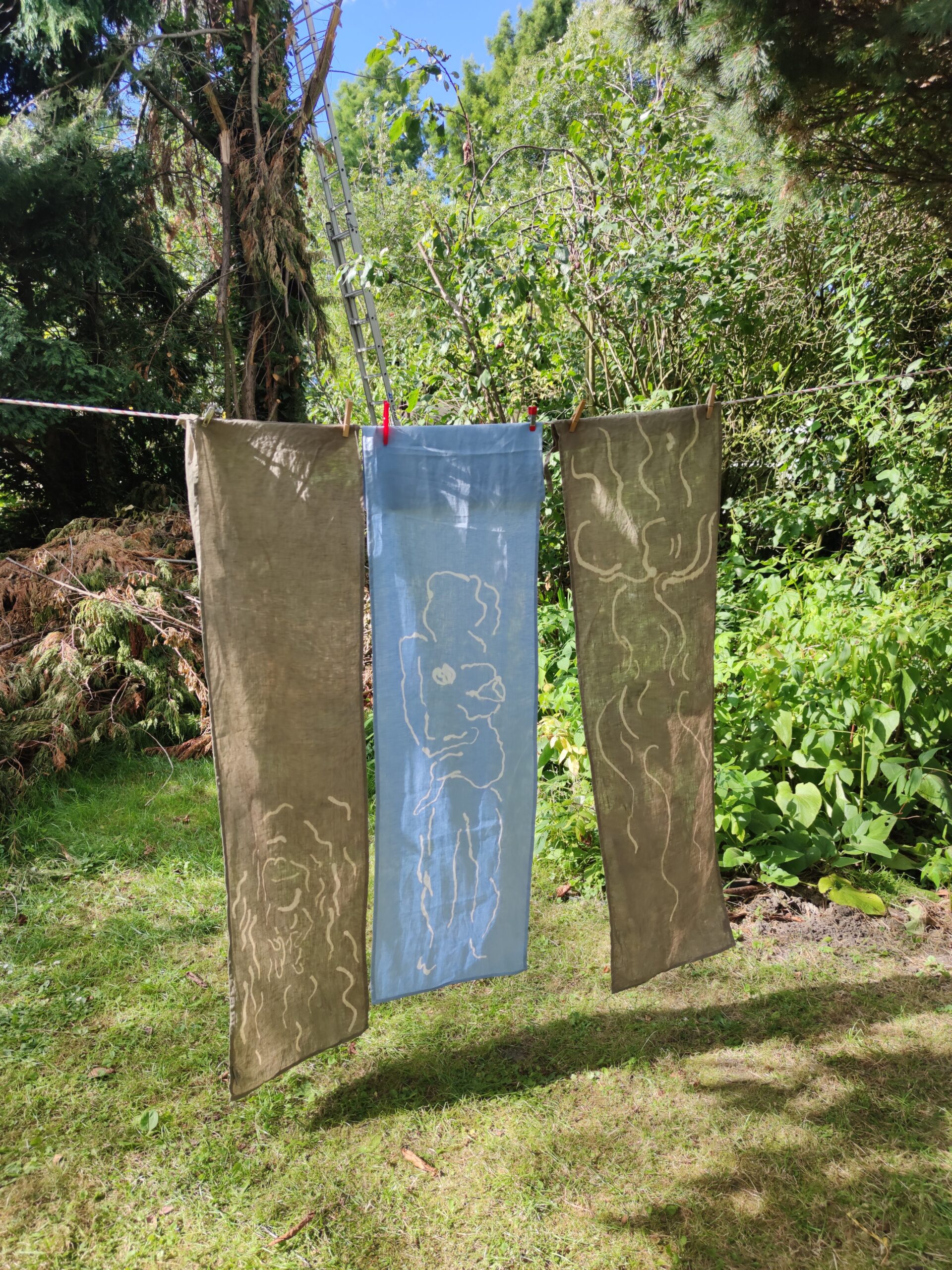
Amy used a similar process with the fabrics on which she made her drawings. Dyeing many of the fabrics herself, using whatever materials were available on hand – coffee, tea and plants from her garden allotment. The fibres of the fabrics were opened, like pores, to allow the dye to be applied. Various metal solutions were used to achieve and fix the desired colour. Using bleach, she created drawings that lifted the colour from the fabric—revealing scenes from this new chapter of motherhood: soft bodies intertwined, biting kisses, nurturing one’s outer child while tending to the inner one, and the inevitable death of an old self as the seed of a new self emerges. In an organic and abstracted style of drawing, she depicted the energies of the heart – in moments of its fullness as well as its emptiness.
The result is from a process-driven approach during the residency and welcomes the viewer to look at the works from different angles, to touch them or even to walk through them.